Fellow Cases

Citizen Observatories Learning from Shared Experiences and Tools

Fellow Cases are newly engaged Citizen Observatories and Initiatives from around the world that joined the CitiObs project in its final year.

Fellows will participate in networking, peer-learning, and workshops to see how the CitiObs tools can support their work. Fellows will get the chance to hear first-hand from FRCs and Alliance Cases on how CitiObs tools can be implemented, as well as exchange experiences, challenges, and successes to spur creative problem-solving.
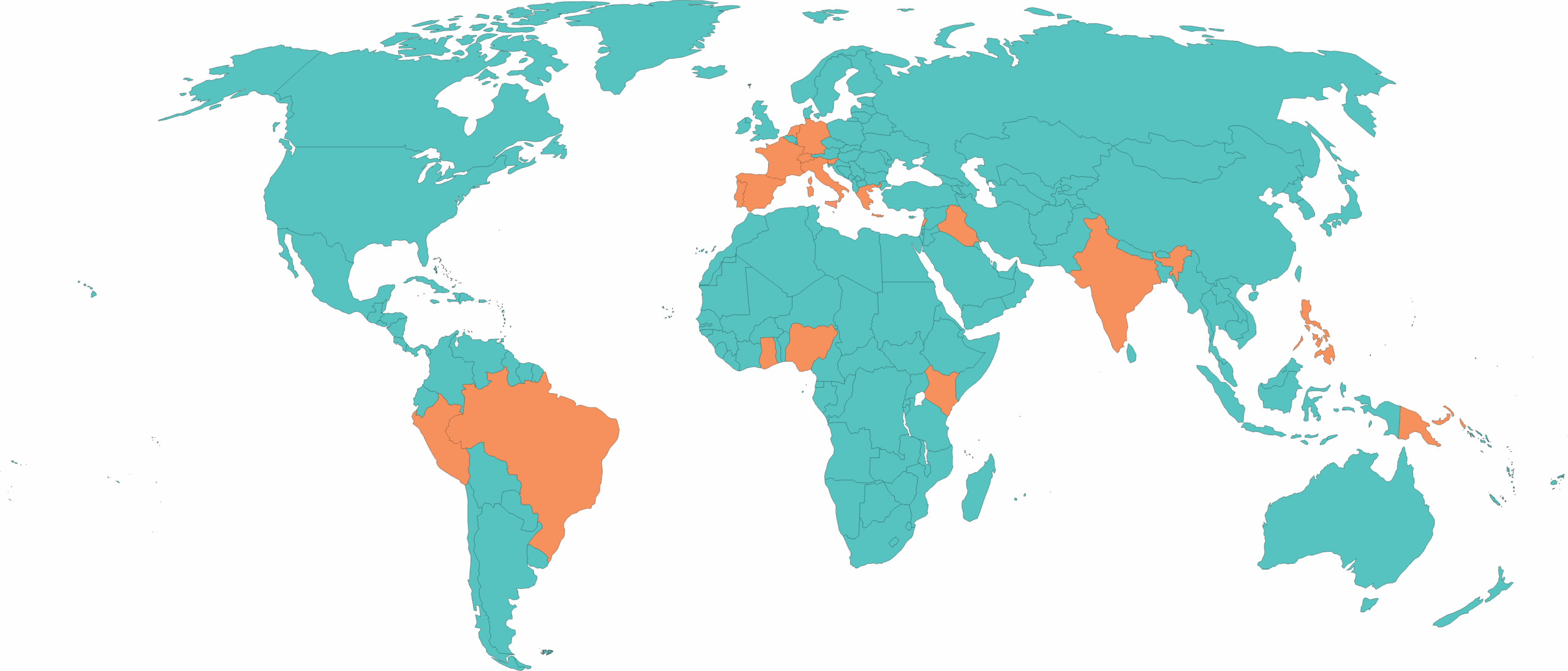
CitiObs is offering the Fellow Cases the following:

📌Access to a suite of tools and toolkits to strengthen initiatives, enhance the work, and effectively navigate challenges. Such tools could support data analysis, creative collaborations for environmental protection, or outreach to schools and minority groups

📌Opportunity to receive low-cost sensors for environmental monitoring and funds for implementation.

📌Gain access to workshops & trainings on the CitiObs tools and toolkits, together with other citizen science initiatives.

📌Opportunities to engage through the CitiObs mailing list and discussion forums with an active network.
The Fellow Cases

AEAAG – School Air Quality

This community observatory focuses on monitoring air quality across different environments, including indoor school spaces (classrooms and corridors), outdoor school areas, and selected locations within the city. Using low-cost sensors, students and teachers collect and analyse data on key air quality parameters, linking them to health, well-being, and learning conditions. The initiative promotes citizen science and STEAM education, raising awareness within the school and wider community, while supporting more informed decisions to improve environmental quality and create healthier living and learning environments.

AEAAG – Water STEAM Living Lab

This community observatory integrates water quality monitoring into STEAM-based outdoor education activities across rivers and dam and Indoor (school and classroom)  Students engage in hands-on learning by collecting and interpreting environmental data using sensors. The initiative combines citizen science, environmental education, and physical activity, promoting interdisciplinary learning and sustainable interaction with aquatic ecosystems. It aims to build a regional network of schools working collaboratively on water literacy, safety, and ecosystem awareness.

Air Citoyen

Air Citoyen promotes long-term citizen engagement in improving air quality through community-based, locally rooted actions. Through its participatory project Air’Ô, it explores how introducing air quality monitoring tools—combined with participant support and follow-up—can strengthen public understanding of air quality issues and influence everyday practices.

Air Quality and STEAM

Science and technology education applied to sustainable and smart cities. Through this activity, students explore urban air quality monitoring and learn how environmental data can support healthier and more resilient communities. Participants are introduced to monitoring methods, data interpretation, and the role of air quality assessment in climate adaptation and urban decision-making. The activity also encourages interest in STEAM fields by connecting scientific knowledge with real-world environmental challenges.

AmIAire

This initiative engages schools across Spain in monitoring air quality with DiY air quality sensors in their local environments. It combines environmental awareness, scientific learning, and community engagement, empowering participants to understand air pollution as a local, actionable issue while strengthening the connection among education, science, and society.

Amsterdam Autoluw (Amsterdam car-free)

Amsterdam Autoluw advocates for a liveable city with less traffic, more safety and clean air.

Asia Nature Challenge

This initiative aims to reconnect people with nature and make Asia’s biodiversity visible.

Bengaluru Flood observatory

This initiative maps and assesses the stormwater drain network in the city and crowdsources flood hotspots.

Benidorm CORE – City Operations, Resources & Environment

This initiative integrates environmental and urban data into a real-time city platform to improve coastal sustainability, water management, safety, and governance through evidence-based decision-making.

Bewonersraad Amsterdam

Bewonersraad Amsterdam measures air quality and noise pollution on busy streets to tyr to improve the situation for thise living along the roadside.

Biodiversity count Asia

This initiative documents biodiversity in Asia through a collective approach and connects it with other environmental factors such as air quality.

Center for Global & African Contemporary Entrepreneurship (CGACEL)

This initiative integrates urban air-quality documentation into its community-based work. Through citizen-led observation, participatory mapping, community surveys, and documentation of pollution sources such as traffic congestion and open waste burning, it supports evidence-informed advocacy and awareness on environmental health risks. This approach links entrepreneurship, community resilience, and environmental sustainability, enabling local actors to identify challenges, co-design solutions, and engage policymakers using locally generated evidence.

CIPRA Slovenia

This initiative advocates for air and water quality and is part of International the Commission for the Protection of the Alps, CIPRA It also aims to expand its network to include more stakeholders on water and air quality. 

Citizen Science Africa Project

This initiative supports evidence-informed advocacy and awareness on environmental health risks.

City Nature Challenge India

Collaborates with cities across India to take part in the City Nature Challenge and showcase our rich urban biodiversity. 

Clean Air One Atmosphere

This initiative contributes to evidence-informed local dialogue on air pollution, exposure, and mitigation, and strengthens the role of citizens in urban environmental governance through the combination of grassroots monitoring and structured community engagement.

Clean Cities Spain

This initiative promotes air quality awareness and behavioural change.

Climate-Health-Environment Citizen Observatory (CHECO)

This initiative documents environmental inequality by comparing high-traffic corridors, market areas, residential neighbourhoods across socioeconomic divides, schools near pollution sources, industrial-residential interfaces, and primary healthcare facilities. This spatial analysis reveals how low-income communities bear disproportionate environmental burdens while lacking evidence to demand accountability.

Community-based air monitoring in Port Harcourt

This initiative focuses on community-based air quality monitoring in Port Harcourt, Nigeria, a petroleum-impacted urban and deltaic environment experiencing recurring particulate pollution and broader environmental contamination. It is transitioning toward a citizen observatory model, deploying indoor and outdoor sensors to generate baseline data on air quality and environmental conditions. The initiative integrates community and school-based engagement to build awareness and participation, while strengthening data reliability and supporting the use of environmental data for research, awareness, and local decision-making, with links to wider environmental health concerns.

DIY Air

This initiative focuses on creating a do-it-yourself video on how to build, program, and deploy a NO₂ sensor to lower the threshold for participation. It aims to recruit participants near vulnerable communities, generate insights into local air quality, raise awareness, support behavioural change, and provide data for city-level measures such as traffic management and green buffers.

El aire que respiro

This initiative turns invisible data on air pollution into clear and practical health recommendations for communities in Lima.

Focus Association for Sustainable Development

This initiative identifies areas with the highest heat exposure and combines this analysis with information on where vulnerable groups live and spend their time. By overlapping these criteria, it determines priority locations for action and organizes citizen science workshops to involve residents in monitoring heat and co-creating solutions, followed by the implementation of targeted heat-adaptation measures.

Ganga River Pollution Initiative

This initiative aims to strengthen community participation, co-produce knowledge with community members, enhance engagement, improve awareness of environmental health risks related to water pollution, and generate citizen data to support policy influence.

Ghana FabLab Environmental Citizen Observatory

This initiative engages students, makers, and local residents in participatory environmental monitoring and sustainability action. It combines low-cost IoT sensors, digital fabrication, and hands-on training to collect, visualize, and use environmental data, particularly related to air quality, urban heat, and pollution. Through workshops, school outreach, and community collaboration, it aims to empower citizens with practical skills, raise environmental awareness, and support data-informed decision-making.

Global Open Air Quality Standards (GO AQS)

This initiative aims to popularize a global open standard for indoor air quality in an effort to democratize health.

Green transportation

This initiative supports the switch from the current internal transport system, which relies on diesel cars, to an environmentally friendly. 

Heel Wielwijk Meet

This initiative focuses on measuring and monitoring the effect of climate adaptation measures.

HollandseLuchten

HollandseLuchten a citizens science project in the netherlands. Measuring the air quality in the province of north holland.

Hyderabad Annual Tree Biodiversity Survey

 This initiative focuses on understanding the relationship between trees and animals in the city by recording fauna observed during surveys. It also aims to strengthen participants’ connection with nature and promote environmental awareness.

Hyper-Connector

This initiative explores how phygital urban prostheses can translate environmental and urban data into multisensory experiences in public space. It enables citizens to interact with information such as sound levels, humidity, temperature, or crowd density through collective spatial interaction rather than visual dashboards. The research aims to support more inclusive, participatory, and accessible urban interfaces, including non-visual forms of perception within citizen observatory frameworks.

India's Nature Festival Series

This initiative focuses on documenting biodiversity through citizen participation.

Institut écocitoyen en santé environnementale de l'Aude

This initiative conducts citizen-led environmental health research to respond to citizens’ questions about the impact of pollution on health.

iSPEX

A smartphone (spectropolarimetry) add on to measure both air and water quality.

KAP Jasa (Kite team)

This initiative focuses on assessing water pollution using kite-based methods.

Additionally, KAP Jasa is performing aerial archaeological and cultural heritage surveys using kites.

Mahila Housing Trust

This initiative focuses on generating micro-level insights to build resilience in low-income communities in cities by mobilising community women volunteers to map hazards like heat.

Moncalieri Biodiversa

This initiative investigates the relationship between urban heat and the distribution of geckos as bioindicators and aims to increase citizen engagement in biodiversity monitoring.

Monitoring water quality with students with disabilities

This initiative focuses on monitoring water quality through inclusive, hands-on activities involving students with disabilities. Conducted in indoor/outdoor environments,students are actively engaged in observing, measuring, and understanding key water quality parameters, promoting scientific literacy, environmental awareness, and social inclusion. The initiative is closely linked to STEAM education and inclusive pedagogy, ensuring that all students can meaningfully participate in citizen science while interacting safely and actively with aquatic environments.

No More NOx

No More NOx is a citizen science and public engagement project promoted by the University of Modena and Reggio Emilia to involve residents of Modena and Reggio Emilia in monitoring nitrogen dioxide (NO₂). Citizens and researchers together measure air quality using passive samplers and share the results in a clear and transparent manner. No More NOx is a participatory science initiative to understand how traffic and urban activities affect the environment and public health. Everyone can contribute, starting from students, families, teachers and residents curious to find out ‘what the air is like’ in their neighbourhood.

Noise pollution in outdoor learning spaces

This initiative aims to better understand sound exposure patterns and their impact on learning, well-being, and physical activity. The results aim to support the design of healthier, more inclusive, and activity-friendly outdoor environments.

OCIO (Civic observatory on Housing and Residency)

This initiative documents data on public and affordable housing, short-term rentals and student housing in Venice.

Onl'fait

This initiative focuses on monitoring water quality of Lake Geneva, rivers, and torrents in the region and raising awareness among students about fresh water and open data.

Samen Meten Bonaire

Project in initiating phase to enroll a citizen’s science measuring network on the island of Bonaire to engage the community and gather data on air quality, with a focus on hotspots like the landfill.

STEAMies France

This ERASMUS+ initiative focuses on strengthening secondary school students' STEAM skills and civic engagement in addressing climate change, particularly through citizen-science monitoring of air and water quality.

StreetSmart

StreetSmart builds public demand for better streets by helping people recognise how everyday street design shapes health, safety and climate resilience. It turns lived experience into structured, street-level insight to inform urban planning and policy decisions. Through real-world pilots, the platform collects qualitative data and makes it visible and actionable for municipalities.

Sustainable Community Development Foundation

The Amihan Initiative

This initiative focuses on real-time continuous monitoring of air quality using low-cost sensors to improve awareness and air quality.

UhAI

UhAI {/u-ˈha.i/} means Life in Swahili language. 

This initiative by The Demography Project aims to improve people & planetary health  outcomes as well as urban habitability in Kenya through air, water, noise, weather, and seismic assessments/monitoring using artificial intelligence, community engagement, citizen science and environmental education.

Urban and peri-urban built environment

This initiative focuses on integrating urban green solutions, such as green roofs, green façades, and nature-based shading elements, into construction and planning practices. It works in close interaction with local communities and urban stakeholders.

WAFLAK –Water for Life Alliance Kenya

WAFLAK-Water For Life Alliance-Kenya is a community based organization that focuses on SDG no.6 Water and sanitation. Has a mission of ensuring that the community is well informed and enlightened on matters water and sanitation. Has a vision of seeing every house hold access clean adequate water and has proper sanitation.

Water quality and STEAM

Practical and interdisciplinary learning in environmental monitoring and sustainable urban management. In this activity, students focus on water quality assessment in urban environments, using analytical kits and portable meters to measure chemical and physical parameters such as organic matter, nitrate, total phosphorus, pH, dissolved oxygen, temperature, conductivity, and total dissolved solids. The initiative helps students understand the importance of water data for environmental protection, climate adaptation, and sustainable city planning.

Ya Basta Bologna ODV –Scift

Scift is a permanent technology laboratory developing within the network of Bologna's "Municipi Sociali". The initiative's goals are: to build a citywide network of fixed and mobile sensors; monitor environmental issues in the Pescarola district, which is exposed to Marconi Airport overflights, urban redevelopment, and the impact of asphalt industries.

Youth Seeds for a Just Transition

Erasmus+ “Youth Seeds for a Just Transition” aims to strengthen democratic and civic participation among young people in the ecological and social transition. Building on a transnational collaboration between 8 partners from the European Union and a neighbouring country (Georgia), the project seeks to involve young people in decision-making processes, equip them with key skills for a just transition, and promote innovative solutions co-designed with experts and local decision-makers. Through workshops, digital training, participatory events, and the development of inclusive service prototypes, this project raises awareness among young people and their communities about sustainability, equality, and social justice. The project wil be implemented in 8 municipalities.

TOP