

What does it mean to study air quality in Ukraine today?
For some cities, this primarily means measuring PM2.5 and PM10 concentrations, for others, it means traffic loads, industrial emissions, or seasonal changes. But for Ukrainian cities that are simultaneously facing climate change, urbanization and, most importantly, the consequences of the war, the issue of air quality becomes much broader.
Is it enough to measure only the concentration of fine particulate matter? What happens to the air throughout the day? How do air quality indicators change under the influence of weather conditions, local human activities, or continuous shelling? In addition, new questions are becoming increasingly relevant in Ukraine. What is the air quality like in schools and shelters? Ukrainian children spend a significant part of their time in shelters, where they not only study but also take tests and exams. In some cities, underground schools are being built and operating, where a child can spend up to eight hours.
It is also important to ask whether it is possible and appropriate to involve schoolchildren and students in such research and in developing measures to adapt to these conditions. The experience of citizen observatories in Ukraine shows that it is.
In Mykolaiv, Myrhorod and Dnipro, schoolchildren, students, teachers and researchers are already using accessible sensor technologies to observe the environment through the CO Mykodovkilia. Local measurements are becoming part of a broader citizen science network, while educational institutions are joining European environmental monitoring efforts. This work is developing with the support of the CitiObs project, with MykoDovkillia participating as one of the Alliance Cases and demonstrates how the European approach to citizen observatories can be adapted to the Ukrainian context.
One of the first educational locations in the network was established in Mykolaiv lyceums. The Mykodovkilia team provided the lyceums with Smart Citizen sensors (https://smartcitizen.me/kits/), which make it possible to regularly collect data on fine particulate matter concentrations, temperature, humidity, atmospheric pressure, noise and ultraviolet radiation. The sensors were connected to the open Smart Citizen platform, where the data can be used for educational and research purposes. The environment around the schools became a kind of open-air laboratory. Students had the opportunity not simply to learn what air pollution is, but to observe it directly: to see changes in the indicators, compare different periods and ask their own questions.
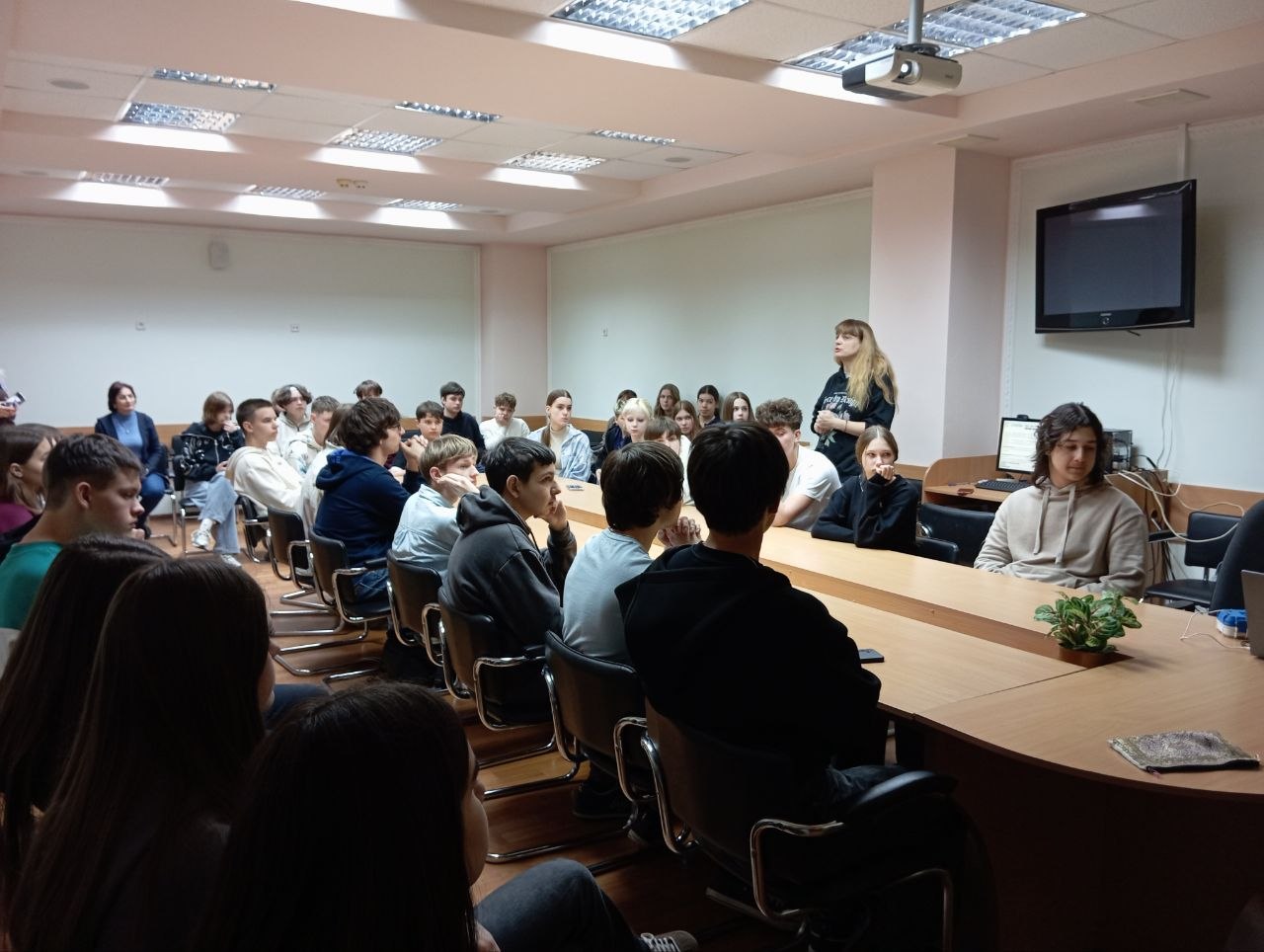
During meetings with schoolchildren, the MykoDovkillya team demonstrated how Smart Citizen sensors work, which parameters they measure and how the collected data can be interpreted. Students conducted small practical experiments. For example, artificial noise typical for a school break was created, and the students observed how the sensor recorded it. When the level reached 80 dB, the children could not only see how the sensor worked, but also imagine how teachers feel when working under such conditions. Analysis of daily data showed that during the spring period, the highest PM values in our observations were recorded in the morning hours — approximately between 5:00 and 7:00. An interesting educational experiment involved tobacco smoke, when a significant increase in pollutant concentration was observed near the source. Thanks to the network of sensors, changes in the indicators could also be observed on the platform from another location in the city.
Such results do not replace professional monitoring, but they help identify patterns and formulate new questions. Why do the indicators change at this particular time? What role do weather conditions play? Are the changes related to traffic or other local sources? Scientific research often begins with such simple questions.
Connecting a school location to the network makes it possible to compare data with other locations and see changes that may remain unnoticed in a single location. Students are particularly interested in observing changes in air quality indicators in other European cities. For schoolchildren, this became a clear example of why environmental monitoring is increasingly moving from individual measurements toward observation networks.
The experience of educational institutions has also shown that the air people breathe is not only the atmospheric air outside a building. Unfortunately, during this school year, children spend a significant part of the day indoors, underground — in shelters. In these circumstances, data on indoor microclimate becomes particularly important. A large number of children may be present in the same room at the same time. As part of the Alliance's support, three educational institutions in Mykolaiv received wall-mounted monitors for shelters, which allow temperature, humidity and CO₂ concentration to be monitored online. This allows students and teachers to see how air quality changes depending on the number of people, ventilation and the length of time spent indoors. This is important because these conditions affect children's well-being, concentration and overall state. It should be noted that the devices very often recorded CO₂ levels exceeding 1,000 ppm. This indicates deterioration of indoor air quality and should be a reason to review ventilation conditions.
In this way, a citizen observatory goes beyond the traditional concept of “ambient air monitoring” and begins to cover the entire environment in which a person studies, works and stays during emergencies.
In addition to schools, simple sensors have become the basis for student research projects. In particular, in Mykolaiv, a student of a shipbuilding university studied the possibilities of using data from public air quality sensors as part of her thesis. At the same time, she installed a sensor herself and monitored all of its capabilities in practice.
Interesting research has also been carried out by students in Dnipro. Students of Taras Shevchenko National University of Luhansk, specializing in Environmental Science, use Smart Citizen data to study the climate vulnerability of urban ecosystems and develop adaptation measures for them. Here, the same technologies help answer a different question: how does the urban environment respond to climate change, and how can it be made more resilient?
Another area of research is developing in Myrhorod, where the issue of air quality has become particularly important because of the war context. A third-year student at Taras Shevchenko National University of Luhansk conducts continuous air quality observations near a kindergarten using Smart Citizen data. During May–July 2026, background PM10 values in Myrhorod generally remained relatively low. The median value was approximately 12 µg/m³. At the same time, at least five days with significantly higher values were recorded. The highest daily value, approximately 125 µg/m³, was recorded the day after a documented drone strike on a private household in Myrhorod district. Other elevated values, around 105, 73 and 110 µg/m³, also chronologically coincided with periods when drone attacks were reported. The observations are continuing, and a larger dataset will be available for analysis in the near future.
For Ukraine, where many areas are affected by the war, the possibility of having a local time series of environmental observations is particularly important. Mykolaiv, Myrhorod and Dnipro have different experiences and different environmental challenges. At the same time, they share the significant shelling of these territories by russia. In Mykolaiv, sensors have become a tool for environmental education and urban monitoring. In Myrhorod, they help study temporal changes in air parameters under the influence of war-related impacts. In Dnipro, students use the data to study the climate vulnerability of urban ecosystems.
Citizen observatories do not replace professional or state environmental monitoring; their strength lies elsewhere. They create additional observation points, engage young people in science and in understanding climate change processes, make environmental data more accessible, and help communities formulate their own questions about the state of the environment. For Ukraine, this is particularly important.