On a bright Wednesday morning in April, fifteen people gathered at Sectie-C — a vibrant cultural and creative community hub in Eindhoven — for the first CitiObs Roadshow: a face-to-face encounter between Dutch and Flemish Citizen Observatory cases, focused on inclusion and the question of who gets left behind.
The event brought together representatives from seven Citizen Observatory cases — spanning Fellow, Alliance, and Frontrunner City cases — some of whom had never met before. A few travelled more than an hour and a half each way to be there. As one participant put it at the end of the day: "Beforehand, I asked you if it was worthwhile for me to come because of five hours of travel in total. And it was worth it."
Getting to Know Each Other — with a Focus on Inclusivity
The event was framed as a "Nederlandse-Vlaamse kennismaking en workshop over inclusiviteit" — a Dutch-Flemish get-to-know-you and workshop on inclusivity. The primary goal was simple but important: give Citizen Observatory practitioners the space to hear each other's stories, and learn from each other’s experiences.
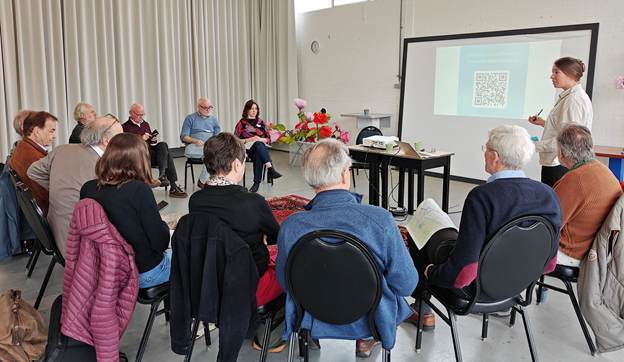
Some participants already knew each other from regional events or national networks. Others were meeting for the first time. The mix included people with decades of experience in community monitoring and others just getting started, policy-makers from municipalities like Waalre and Eindhoven, and grassroots initiative leaders working on air quality, noise pollution, and community participation.
Painting Layers on the Map
The centrepiece of the morning was a hands-on workshop activity drawn from the CitiObs Leave No One Behind (LNOB) Toolkit: the Painted Layers on the Map method. Participants worked around a long communal table with A3 printouts of their cities and neighbourhoods, annotating and colouring as they talked.
The questions guiding the activity were rich and grounded: What does your initiative measure? Where does it take place? Who is affected by the problem — and who benefits from a solution? Who participates in measurements, and who doesn't? Are there any 'sacrificial zones'?
The effect of working around a shared map was striking. As one participant reflected: "We had a completely different kind of conversation colouring on the map together, pointing things out, and marking as we talked. In the open circle, the louder voices can stay talking longer and other voices aren't heard — but at the table it was smaller but more active discussions." Another said "That was more fun than I expected — my first reaction was that I didn't feel like colouring."
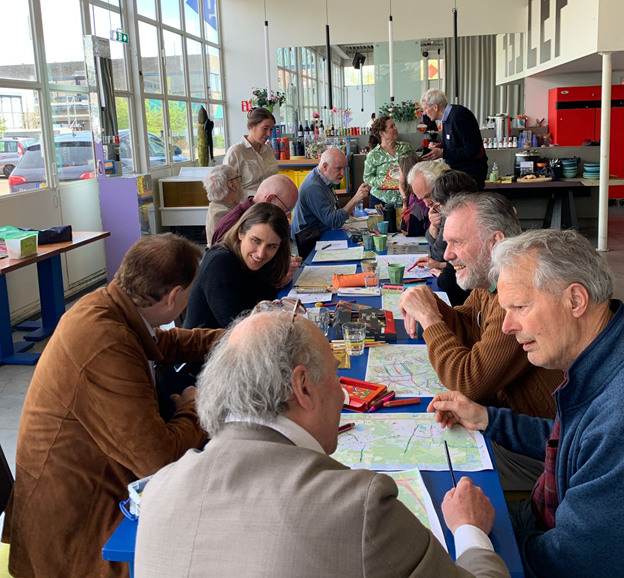
Another participant, whose own freelance practice involves Asset-Based Community Development (ABCD), noted: "This is very similar to my own practice, where we collaboratively mark various assets in the community such as parks and community hubs. It allows a completely different kind of conversation to take place."
Shared Challenges, Honest Reflections
The discussions surfaced a set of challenges that many of the cases are navigating, regardless of their size or maturity:
How do we reach policy makers to bring about real change? Citizen Observatories are generating data and insights, but translating that into actual policy action remains difficult. The more experienced initiatives are all facing what is known in the literature as the policy-gap.
How do we keep people motivated? For initiatives running for many years, maintaining participation and bringing in fresh energy is a genuine concern.
Both air quality and noise matter. There was a pointed conversation about the difference between regulatory norms (measured over a year) and meaning — what people actually experience day to day.
Two key lessons shared that resonated across the group were regarding a diverse range of skills: "You need a complimentary range of people involved in the initiative: technical people to help with sensors but also people who are good communicators and can focus on participation." and the importance of not trying to do everything yourself: "Just let go and step aside. It may lie still for awhile but others will pick up the tasks in their own way. Step off the stage in time, and give the stage to others."
The Space Made It Possible
The venue itself played a role in the success of the event. The light-filled, high-ceilinged space at Sectie-C — recommended by one of the participants and hosted with warmth by the venue team — created the kind of energy that a generic meeting room rarely does. Having a circle of chairs for opening introductions and then moving to a long communal table for the activity gave the day a natural rhythm, and allowed smaller conversations to also take place.
"I really enjoyed hearing about other small local initiatives, and not just the national view or big picture story. It was really nice to just be comparing with each other," said one participant.
What Comes Next
The session only scratched the surface. Time flew by, and participants left with a list of topics they would still like to explore:
- Community building and storytelling — how to bring in new participants and maintain momentum, and allow new voices to be heard
- Bridging the gap with policymakers — and moving from awareness to real tangible action for change
- Technical deep-dives — comparing sensors, troubleshooting, next steps for measurement infrastructure
- The power of bottom-up — how citizen-led initiatives can secure ongoing support, including from municipalities
The CitiObs team will be reaching out to participants to plan a follow-up, asking what format and topics would be most useful. The question of whether to invite local politicians or civil servants to join future sessions — to begin bridging that action-gap directly — is actively on the table.
The Eindhoven Roadshow was organised as part of the CitiObs project's work on Citizen Observatories in Fellow Cities (Task 3.3), coordinated by Eline Verhoeven (RIVM) and Margaret Gold (ULEI). The Leave No One Behind Toolkit used in the workshop is available at inclusivity.toolkit.citiobs.eu.
Follow CitiObs at citiobs.eu for updates on upcoming events.