

Small Sensors, Real Questions: What Indicative Monitoring Is and Why It Matters
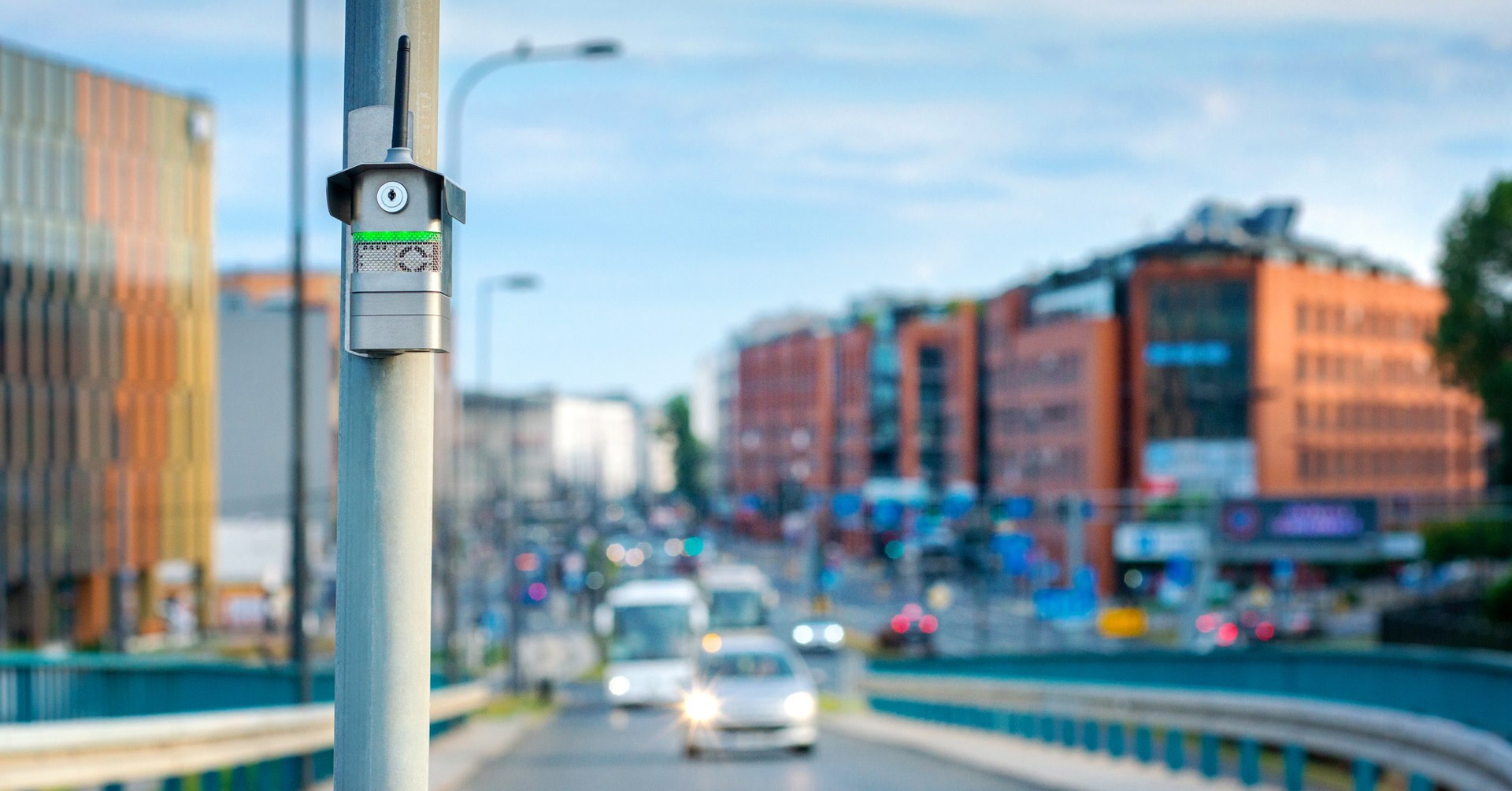
Air quality monitoring has long relied on large, expensive reference stations: instruments installed in fixed locations, operated by environmental agencies, and capable of providing legally defensible measurements for compliance reporting. That model still matters. But over the past decade, a different category of technology has entered the field, bringing with it a set of questions worth addressing directly.
What are small sensors, exactly? How reliable is the data they produce? And where do they genuinely add value?
What “low-cost” actually refers to
“Low-cost sensor” is standard terminology in the scientific and regulatory literature, and it refers to one thing specifically: the initial purchase price of a device relative to reference-grade instruments. PAS 4023:2023, the UK code of practice developed by the British Standards Institution (BSI) on behalf of Defra, states this directly: the term is not an indicator of measurement accuracy.
That distinction matters because the lower unit cost is what makes dense networks possible in the first place. A city that can afford three reference stations can often afford fifty indicative sensors, and fifty measurement points produce a fundamentally different picture of urban air quality than three do.
The second distinction is regulatory, and it is more nuanced than it is often presented. Certification schemes exist for both tiers of instrument. Reference-grade monitors are approved as equivalent methods for compliance reporting against legally binding limit values, while schemes such as MCERTS in the UK certify indicative monitors against their own defined performance requirements. The difference lies not in whether a device can be certified, but in which performance tier it is certified against and how the resulting data may be used.
What small sensors measure
Modern indicative sensors are capable of measuring a range of pollutants: particulate matter (PM1, PM2.5, PM10), nitrogen dioxide (NO2), ozone (O3), carbon monoxide (CO), and sulphur dioxide (SO2), among others. They operate continuously, with data refresh rates of a few seconds to a few minutes. They are compact, relatively easy to deploy, and can be installed at street level, near school gates, at construction perimeters, or along traffic corridors.
Their accuracy depends heavily on how they are deployed and maintained. Co-location with reference instruments, regular calibration, and robust quality control allow indicative sensors to produce data that is consistent, comparable, and suitable for operational decision-making. Where these practices are in place, the data holds up to scrutiny.
Who needs air quality sensors and why
The value of indicative sensors becomes clear when the question shifts from “how precise is a single reading?” to “what do we need to understand about air quality across a city?”
Reference stations are accurate but sparse. A city of half a million residents might have three or four official monitoring points. That coverage can tell authorities whether annual averages meet regulatory thresholds. It cannot tell them where on a busy arterial road exposure peaks, whether a school playground is significantly more polluted than the street 200 metres away, or whether a newly installed bus lane is improving or displacing pollution.
These are the questions that dense networks of indicative sensors are designed to answer. Several sectors have particularly clear use cases.
Local and regional authorities
Councils increasingly need hyperlocal data to design and evaluate interventions: Low Emission Zones, Clean Air Zones, traffic management schemes (such as school streets), and active travel infrastructure. Without street-level data, the evidence base for these decisions remains thin.
Schools and public health services
Organisations need to understand where particular groups of residents are actually exposed, not where the nearest reference station happens to be located. Sensor networks placed at school gates and in playgrounds provide a more honest picture of daily exposure for one of the most vulnerable groups. Hospitals and care facilities present a similar case: patients already managing respiratory or cardiovascular conditions are among those least able to tolerate elevated pollution levels.
Industry and construction
Companies operate under obligations to monitor emissions at source and demonstrate that mitigation measures are effective. Real-time data from fence-line sensors allows operators to respond to concentration spikes immediately, rather than learning about exceedances from a periodic inspection report.
Citizen observatories and research institutions
Science centers use indicative sensors to extend the spatial coverage of monitoring programmes, engage communities in data collection, and generate evidence for policy advocacy.
Data quality, standards, and independent assessment
This is where legitimate scepticism about small sensors is most concentrated, and where the conversation has evolved considerably in recent years.
For years, the sensor market operated without a common framework for evaluating performance. Manufacturers made claims about accuracy that were difficult to verify against a consistent standard. That gap is now closing.
CEN Technical Specification TS 17660 provides a structured European framework for testing and evaluating sensor-based air quality systems. It introduces performance classes, comparable to energy efficiency ratings, that allow authorities to compare devices against consistent criteria. The revised Ambient Air Quality Directive (AAQD 2024) formally recognises indicative measurements within Europe's regulatory framework and references these standards as the basis for evaluation. Together, they signal that the question is no longer whether small sensors have a place in air quality governance but how to identify the devices that perform to a verified standard.
Companies like Airly have aligned their sensor development with these frameworks, pursuing independent performance assessment as a precondition for deployment in regulatory and public health contexts.
A tool in a system, not a replacement for one
The most productive way to think about small sensors is as one layer in a broader monitoring architecture. Reference stations provide the regulatory anchor. Indicative networks extend the spatial resolution and answer the kinds of questions that annual averages leave open.
None of these sources should be used uncritically. Data from any monitoring technology, including reference instruments, requires verification, quality control, and honest communication of its limitations. The difference is that the tools now exist to do that systematically for indicative sensors as well.
What small sensors bring is access: to information that was previously unavailable, in places that were previously unmeasured, for communities that had previously been told only what the average looked like from a distance.
That is not a small thing.
Related content
 Story
300 Students, 9 Schools, One Mission: Monitoring Greece’s Air with AirLimnos
AirLimnos is an initiative which was born by Web2Learn, a research and development company specialising in digital education, and has joined the… Story
A Look Back, to Start the New Year
It’s 2025 and that marks the start of the third year of CitiObs! We have had an amazing two years working together… Story
Beyond Ambient Monitoring: Why Personal Exposure Reveals What Regional Air Quality Misses
The value of activity-based exposure monitoring through the use of wearables isn't just understanding - it's empowerment. When individuals see their actual…